

Airport check-in is one of the most dynamic parts of the passenger journey.
Unlike a security checkpoint, check-in does not always follow clearly defined lanes. Passengers move between airline counters, self-service kiosks and bag-drop areas. Queues change shape, overlap and sometimes extend far beyond their expected boundaries.
That makes one seemingly simple question surprisingly difficult to answer:
How long is the queue and how long will passengers actually wait?
For airport operations, accurate check-in queue measurement is more than a passenger-experience metric. It provides insight into developing congestion, processing demand, and how terminal capacity is being used.
The challenge is that measuring a dynamic queue requires more than simply counting people inside a predefined area.
Why Airport Architecture Makes Queue Measurement Difficult
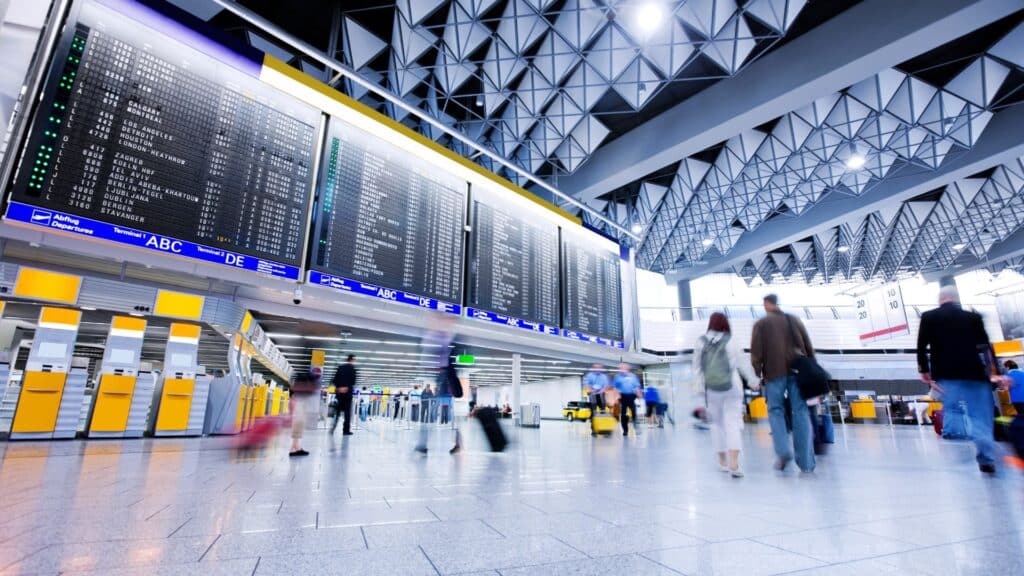
Airport check-in halls are often large, open spaces with high ceilings and wide passenger areas. While this creates an impressive and welcoming environment for travelers, it can make passenger flow and queue measurement more challenging.
For sensor-based systems, the architecture of the terminal directly affects installation, coverage and measurement accuracy. Ceiling-mounted technologies may require different sensor positions depending on the height, layout, and size of the check-in area.
In large check-in halls, achieving complete coverage can therefore require careful sensor planning, particularly when queues extend beyond their expected boundaries or passenger flows move across wide open spaces.
Installation and Infrastructure Requirements
Sensor installation in large airport check-in halls can require significant infrastructure planning. Mounting positions, power supply, network connectivity, and access to high ceilings all influence the complexity of a deployment.
Depending on the technology and existing airport infrastructure, additional cabling or network connections may be required. Installation and maintenance in high or difficult-to-access areas can also require specialized equipment and coordination with airport operations.
For airport queue measurement, the deployment concept should therefore consider not only measurement accuracy, but also installation effort, infrastructure requirements and long-term maintainability.
Why Dynamic Check-In Queues Are Difficult to Measure
Unlike security checkpoints with clearly defined lanes, airport check-in areas often involve multiple airlines, handling agents, counters, self-service kiosks and bag-drop points operating within the same space.
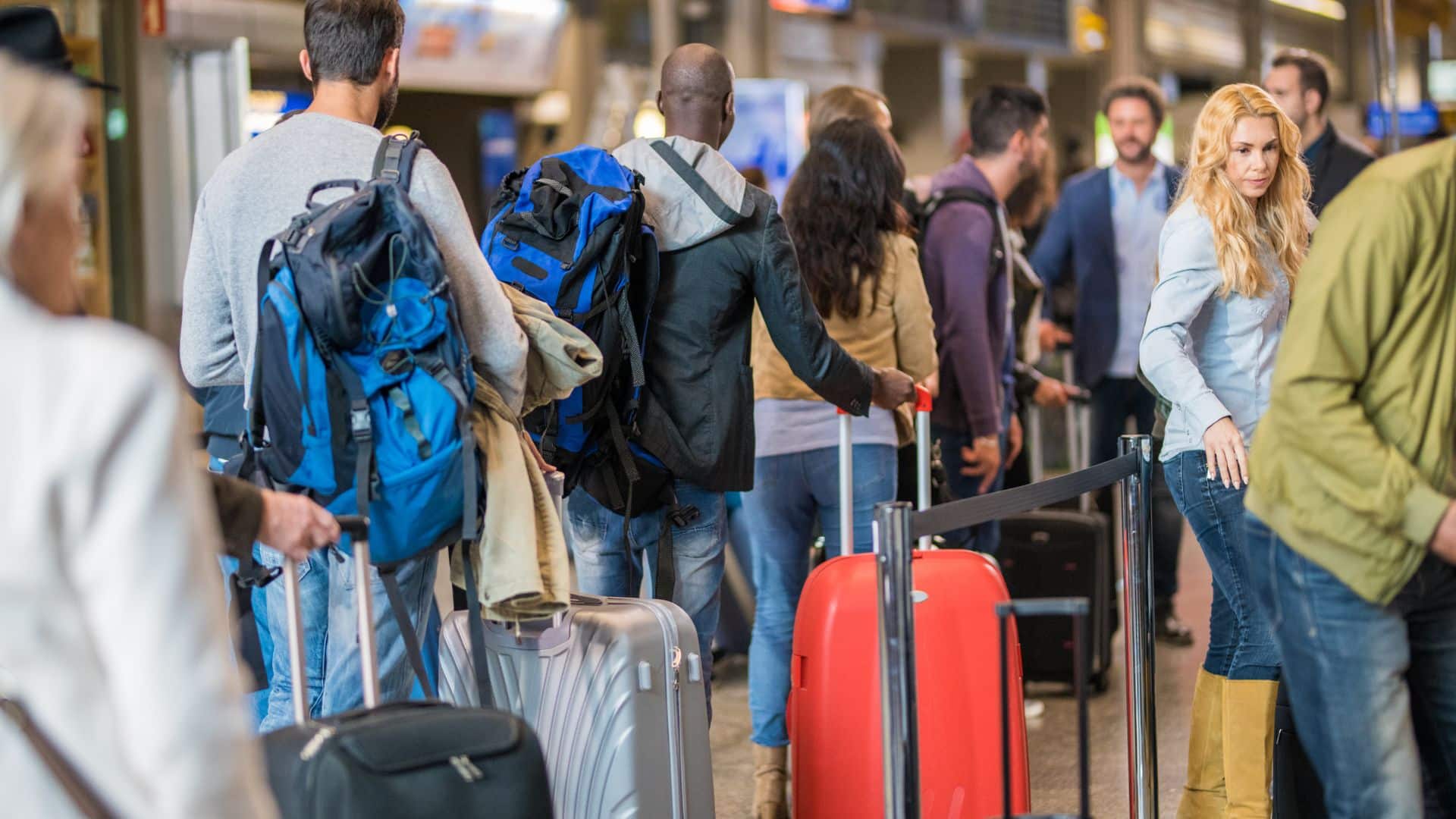
As passenger demand changes, queues can grow, shrink, change direction or extend beyond their expected boundaries. Passengers may also move between counters or cross through other queues while searching for the correct check-in or bag-drop point.
This makes accurate airport check-in queue measurement particularly challenging. Simply detecting the number of people within a predefined area may not be enough to determine which passengers belong to a specific queue.
The challenge becomes even greater when two or more queues overlap. Accurate measurement requires understanding where each queue originates and associating passenger movement with the correct processing point.
For airport operations, this distinction matters. Incorrect queue assignment can affect calculated queue lengths and waiting times, providing an incomplete picture of actual passenger demand.
How LiDAR Can Measure Complex Airport Queues
Dynamic check-in environments require a measurement approach that can adapt to changing passenger flows rather than relying only on fixed queue boundaries.
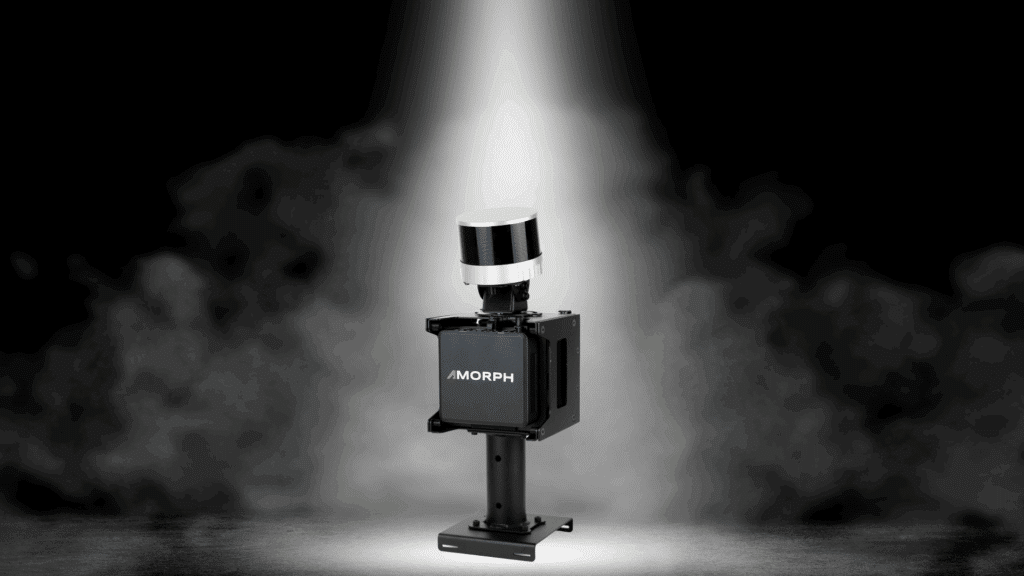
Now, there is AMORPH.senses, a LiDAR-based queue measurement system that addresses all these topics.
LiDAR provides a different approach by detecting and tracking movement in three-dimensional space. This makes it possible to understand how passengers move through larger areas and how queues develop around individual processing points.
AMORPH.senses uses LiDAR-based 3D perception to measure passenger flows and complex queue structures in airport environments.
For check-in areas, this provides several advantages:
- Flexible installation – Sensors can be positioned independently of very high terminal ceilings, helping simplify deployment in large and open check-in halls.
- Reduced infrastructure requirements – Depending on the deployment, connectivity options such as Wi-Fi or mobile networks can reduce the need for extensive data cabling.
- Dynamic queue detection – Passenger movement can be tracked from the relevant processing point, allowing queues to be followed as they grow, change direction or extend across the check-in area.
- Overlapping queue identification – Separate passenger flows can be associated with their respective processing points, helping distinguish queues even when they occupy or cross the same physical area.
- Privacy-first passenger tracking – LiDAR-based perception can measure movement and spatial behavior without relying on conventional video imagery of passengers.
The result is a more detailed view of how passenger demand develops across the check-in area, including queue development, waiting times, and passenger movement.
Airport Queue Measurement at the Next Level. Check it out and contact us for a Trial.
FAQ’s
Why are airport check-in queues difficult to measure?
Airport check-in queues are dynamic and may change shape, overlap with neighboring queues or extend beyond predefined measurement areas. Different airlines and handling processes can also create different passenger-flow patterns within the same check-in hall.
How can airports measure check-in waiting times?
Check-in waiting times can be estimated by tracking passenger movement from the point where passengers join a queue until they reach the relevant processing point. Accurate measurement becomes more challenging when queues overlap or their boundaries continuously change.
How does LiDAR help measure airport passenger queues?
LiDAR measures the position and movement of people in three-dimensional space. This can help airports track passenger flows and dynamic queue structures without depending on conventional video imagery.